
Last updated: October 22, 2026
Quick answer: most newborns only need 1 to 3 minutes of gentle burping after a feed. If you need to burp a newborn, start right after a feed, keep a burp cloth within reach, and use one of three positions until you get a small burp or your baby relaxes. Some newborns burp in under a minute; others need a few minutes and may not burp at all.
Key takeaways
- Burping a newborn is usually about helping trapped air come up after feeding, not forcing a big burp.
- The three most useful positions are over the shoulder, sitting upright on the lap, and face-down across the lap.
- A burp cloth matters because spit-up can follow a burp, especially in the first months.
- If your baby stays calm, keeps feeding well, and has no other concerning symptoms, an absent burp can still be normal.
- Reflux and normal spit-up are not the same thing, and burping does not diagnose either one; if you are unsure, consult a pediatric professional. Cleveland Clinic notes that spit-up is common in infants, while Mayo Clinic explains that reflux concerns need medical evaluation when symptoms are persistent or severe. Cleveland Clinic · Mayo Clinic
How to burp a newborn, step by step
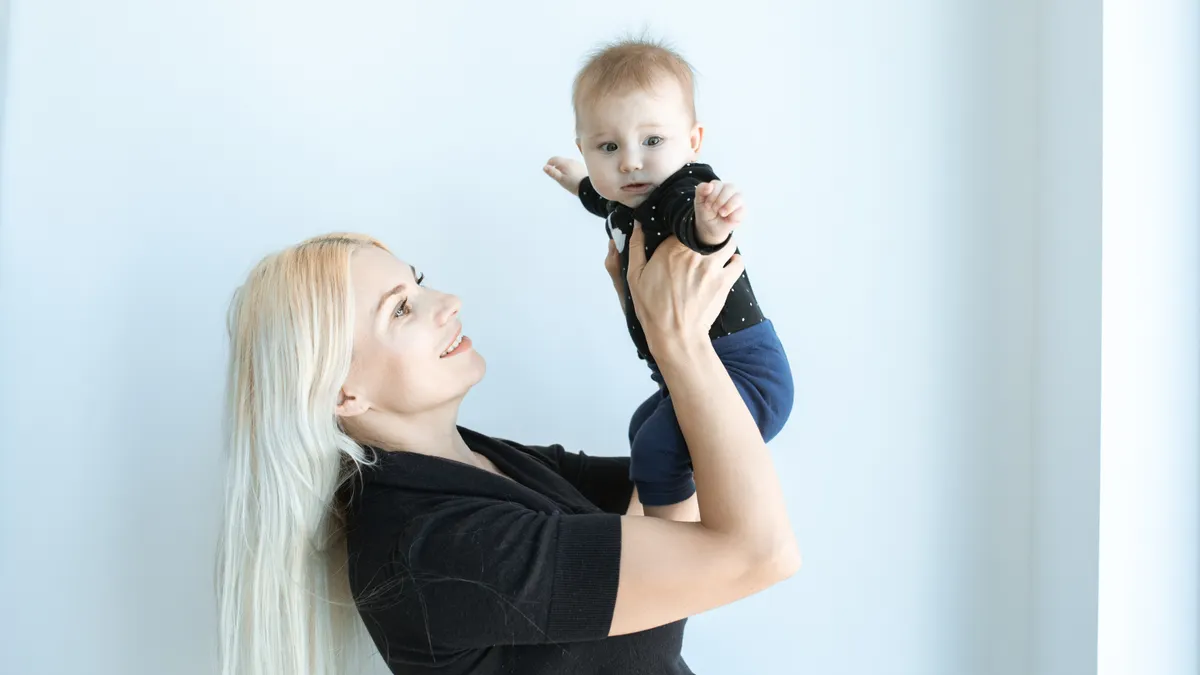
To burp a newborn, support the head and chest in an upright position, pat or rub the back gently, and stop when your baby burps or settles. You need a burp cloth, a safe place to sit, and 1 to 5 minutes of patience.
-
Pause the feeding at a natural break.
Choose a moment after 1 breast or after a small part of a bottle, especially if your baby starts squirming, pulling off, or gulping. A short pause often gives trapped air a chance to rise. If the baby looks comfortable, you can also wait until the end of the feed. -
Place the burp cloth on your shoulder or lap.
A burp cloth protects your shirt and catches spit-up if it comes. Keep it folded flat so it covers your chest or thighs, not bunched into a thick pad that makes the baby sit awkwardly. A simple cotton cloth is enough. -
Choose one upright burping position.
Hold your baby over your shoulder, seated upright on your lap, or face-down across your lap with the head slightly higher than the chest. The goal is gentle pressure on the belly and a straight path for air to move upward. -
Support the head and neck before you start.
Newborns do not yet have steady head control. Keep one hand under the head and neck or across the chest and jaw, depending on the position. The baby should feel snug, not folded forward at the waist. -
Pat or rub the back lightly for 1 to 2 minutes.
Use a soft, steady pat between the shoulder blades or small circles with your hand. Hard thumping is not needed. A burp, a gurgly shift, a swallowed bubble, or a visible softening of the belly all count as progress. -
If nothing happens, switch positions once.
Move from over-the-shoulder to sitting on the lap, or from lap to shoulder. A different angle can free air that was stuck in one spot. If your baby remains calm after a few minutes, you can stop and resume feeding or move on. -
Watch for the end point, not a perfect burp.
Stop when your baby burps, becomes relaxed, falls asleep, or finishes the feed calmly. A newborn does not have to burp every time. For many babies, the useful sign is that the fussiness eases, not that a loud burp appears on command.
Which burping position works best?
The best burping position is usually the one that keeps your newborn upright, supported, and calm long enough for air to move upward. For many babies, that means trying over the shoulder first, then a seated lap burp, then a face-down lap burp if the first two do not work.
Over-the-shoulder burp:
Hold your baby against your chest with the chin resting near your shoulder and the torso upright. Support the head with one hand and use the other to pat or rub the back. This is the easiest position for many caregivers because it uses the shoulder as a firm support point. It also works well when the baby is sleepy. The drawback is that spit-up may land on your shoulder, so the burp cloth should be spread wide.
Sitting burp on the lap:
Sit your baby upright on one thigh, facing sideways or slightly forward, with your hand supporting the chest and jaw. Keep the baby’s back straight and the head just a little higher than the chest. This position is useful for babies who do not like pressure on the belly. It can also work well after a bottle, when air is more likely to sit near the top of the stomach.
Face-down across the lap:
Lay your baby stomach-down across your thighs, with the head turned to one side and slightly higher than the chest. Support the head carefully and pat the back gently. This can help if the baby seems tight or uncomfortable in the other positions. The trade-off is that it gives you less visual access to the face, so you need to keep checking that breathing looks easy and the baby is not slipping.
There is no universal winner. Some newborns only burp in one position, and some do not burp in any position during a given feed. If you want a deeper routine around feeding timing, that belongs with the broader newborn feeding schedule guide, not here.
When should I burp a newborn?

You should burp a newborn during and after feeding, especially when the baby pauses, acts fussy, or gulps air. A common pattern is to try once midway through the feed and again at the end, but the exact timing can be flexible.
The easiest rule is to burp when the feed changes rhythm. A baby who is feeding smoothly may not need a break right away. A baby who arches, squirms, unlatches, or pulls away may be telling you that air is building up. That air can create the tight, uncomfortable feeling parents often describe as gas.
After-feed timing matters too. If a newborn takes the breast or bottle and then starts grimacing, hiccupping, or fussing, a burp attempt within a minute or two is reasonable. Many babies settle after that. Some need a little upright holding even after the burp to keep spit-up from coming back up.
Bottle-fed babies may need more frequent burping breaks because air can enter with the milk flow. Breastfed babies can still need burping, especially if the latch is shallow or the letdown is fast. There is no rule that says every newborn must burp after every single feed. Some do; some do not. The useful question is whether your baby seems comfortable.
If your baby falls asleep during a feed, you can often hold them upright for a short time and skip a forceful burping attempt. A 2- to 3-minute upright pause may be enough. If the baby wakes with clear discomfort later, try a gentle burp then.
What is normal if my newborn does not burp?
It is normal for a newborn not to burp every time, especially if the baby looks settled and the feed went well. A missed burp is not automatically a problem, and trying to force one usually wastes time and may wake a sleepy baby.
A normal pattern can look like this: the baby feeds, pauses, maybe lets out one burp, then feeds again; or the baby feeds, never burps, and still seems fine afterward. That second pattern happens often enough that it should not be treated as a failure, though if discomfort or feeding problems keep showing up, consult a pediatric professional. The real measure is comfort. A calm baby with a soft belly and a normal feeding rhythm does not need to burp on command.
Spit-up can still happen even when a burp comes out first. That does not always mean anything is wrong. Small milky dribbles after feeding are common in newborns because the valve between the stomach and esophagus is still maturing. Burping can reduce swallowed air, but it does not prevent every spit-up episode.
Reflux is a different issue from simple spit-up. Burping a baby does not diagnose reflux, and it does not rule it out; if symptoms are frequent, forceful, or painful, consult a pediatric clinician. This page is about the burping technique itself, not reflux diagnosis.
A good practical standard is this: if your baby is feeding, gaining, and settling well, a missing burp is usually just a missing burp. If the baby stays uncomfortable after several attempts, stop and try again later rather than turning the feed into a struggle.
Common burping mistakes that make it harder
The biggest burping mistakes are pushing too hard, using a weak position, and trying to burp when the baby is already overstimulated. Each one can turn a simple 1-minute pause into a longer, fussier episode.
Pounding the back too hard:
Hard pats do not usually produce a better burp. They can wake a drowsy newborn, make the body stiffen, and add stress without moving much air. Use light pats or a steady rub instead. Think gentle motion, not percussion.
Holding the baby too flat:
A mostly horizontal hold gives trapped air less chance to rise. If the baby is lying back on your arm or slumped in the lap, move to a more upright angle. Even 20 to 30 degrees more upright can help.
Letting the chin drop to the chest:
This can make breathing less comfortable and can compress the upper body in a way that works against burping. Keep the head supported and the neck aligned, especially in the lap positions. The baby should look tucked in, not folded.
Chasing a burp for too long:
If you keep trying for 10 minutes, the baby may become more upset, which makes air swallowing more likely. A short attempt, a position change, and then a stop is usually better than an endless session. If the baby is relaxed after 2 or 3 minutes, that is enough.
Ignoring the burp cloth:
Spit-up is common enough that skipping the cloth often turns a normal burp into a clothing change. Keep one ready before you start. The cloth is not about style; it is part of the setup.
When burping is not enough
Burping is not enough when the baby is consistently uncomfortable, vomiting forcefully, or acting unlike the usual newborn pattern. That is the point to stop treating the problem as a burp issue and consult a pediatric professional for medical advice.
Normal spit-up is usually small, milky, and effortless. A baby may dribble or cough once and then settle. That is different from repeated large vomits, green vomit, blood in the spit-up, a swollen belly, or signs that feeding is becoming a fight every time. Burping does not fix those problems, and it should not be used to explain them away.
A newborn with gas can also seem fussy even after a successful burp. That does not necessarily mean the burp failed. Gas can come from immature digestion, air swallowing, or a tight latch, and a single burp may only help a little. If your baby calms after being held upright for a few minutes, that often tells you more than the sound of the burp itself.
Keep the distinction clear: burping is a comfort step, not a diagnostic tool. It can help with swallowed air and reduce some spit-up, but it does not tell you why a baby is vomiting, in pain, or feeding poorly. When symptoms go beyond ordinary gas or spit-up, the right next step is a clinician, not a longer patting session.
What to do after the burp
After the burp, keep your newborn upright for a short time if spit-up is common, then return to the feed or put the baby down according to the usual sleep routine. A 5- to 10-minute upright hold is a practical way to give the stomach time to settle.
If the baby still wants more milk, resume feeding calmly. If the baby is done, keep the burp cloth nearby and watch the next few minutes for spit-up. A small amount is normal. A complete soaked-through outfit is less typical and may mean the feed was too fast or the baby swallowed extra air.
If you burped once and the baby still seems uncomfortable, try a second position instead of repeating the same one. Many parents find that one position works during the first half of a feed and a different one works at the end. That is normal. Burping is often about matching the position to the moment.
For broader newborn routines, the newborn feeding schedule guide is the better place to look for feeding patterns and timing. This page stays focused on the hands-on part: helping air come up with as little drama as possible.
How long should I try to burp a newborn?
Try for 1 to 3 minutes, then switch positions or stop if your baby is calm. A newborn does not need a long burping session to “count.” If the baby is relaxed, feeding well, or sleepy, more time is not always better.
What if my baby won’t burp?
If your baby won’t burp, but looks settled, that can still be normal. Hold the baby upright for a short time, try one different position, and then move on if nothing changes. If the baby stays fussy, reassess the latch, the bottle flow, or whether the discomfort seems bigger than trapped air.
Do breastfed babies need to be burped?
Many breastfed babies do, but not every one needs it every time. Breastfeeding can still bring in air, especially with a fast letdown or a shallow latch. If a breastfed baby feeds calmly and seems comfortable afterward, a burp may not appear and that can be fine.
Drafted with AI; not yet reviewed by a person.